
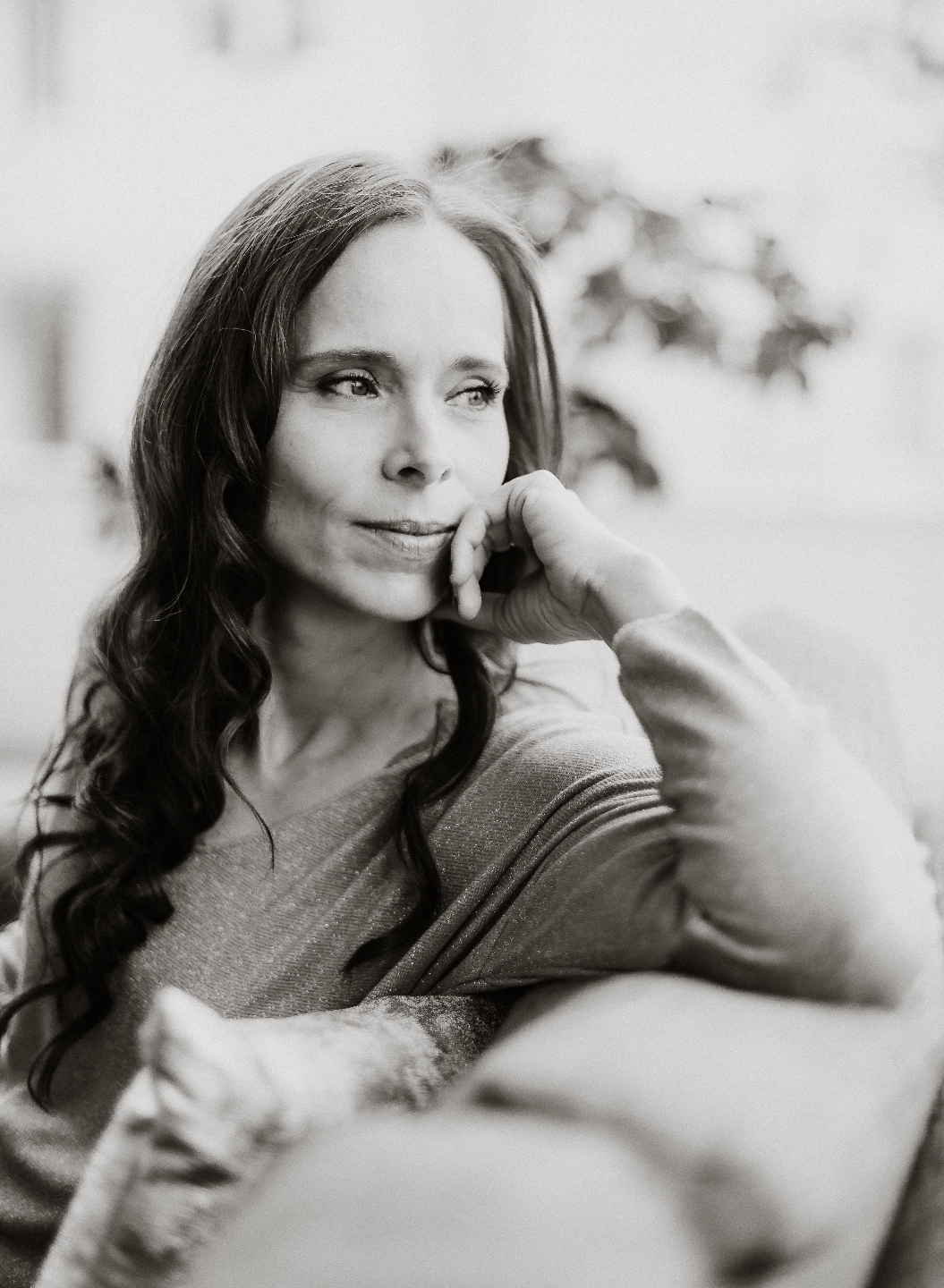
About me...
I trained as a physician and then took a doctorate.
That training gave me something I've come to value enormously: rigour, and the discipline of asking what the evidence actually supports. It taught me to distrust conclusions that arrive too easily, including my own.
It took me a long time to notice that the path itself was not something I had chosen. It had been decided early, by someone who loved me and had a clear picture of what a worthwhile life looked like. I was good at it. I was rewarded for it. And for years I could not have told you that I had never particularly wanted the room I was standing in.
What I did want, I kept largely out of sight — consciousness and spirituality, the things that don't reduce cleanly and fit into conventional boxes, questions that had no comfortable place in the scientific medical world I trained in. I ran that quietly, alongside the rest. It felt like freedom at the time. It took longer to see that keeping something hidden from a frame is not the same as stepping outside it.
Both moves — complying and rebelling — kept someone else's frame at the centre.
I don't regard the training as time lost. The rigour is what makes the rest of this possible. Without it I'd have no way to hold the open questions carefully — to stay genuinely curious about what sits outside our current models without abandoning the standards that let you tell the difference between an insight and a wish.
I write now about what that costs, and how common it is.
Most people are running mental models they never chose and can't see. Not because they were forced, but because they were furnished — with a picture of what a worthwhile life looks like, so early and so completely that it feels like their own.
This is not a subject I selected. It's the thing I have been working out since I was thirteen, when I started keeping a journal because there was no other place to find out what I actually thought, who I actually was.
That's the work now.
I write about consciousness, conditioning, and cognitive sovereignty. I work at the edge where the evidence runs out, and I try not to pretend otherwise. I don't have this solved. I'm not going to write as though I do.
If any of this is familiar, you're in the right place.